Skip Navigation
Skip to contents

JSIE : Journal of Surgical Innovation and Education

OPEN ACCESS
SEARCH
Search

Articles

Page Path
HOME > J Surg Innov Educ > Ahead of print > Article
Original Article
Artificial Intelligence-Assisted Monitoring for Detecting Perioperative Safety Deviations in General Surgical Practice
Opeyemi Qozeem Asafa1orcid, Aishat Omowunmi Asafa2orcid, Ayodeji Olaolu Oyeniran1orcid, Olajide Emmanuel Babalola3orcid, Olumuyiwa Tope Ajayeoba1orcid, Roseline Olufunmilola Folami4orcid, Ganiyu Adebukola Oyeniyi1orcid, Kehinde Adesola Alatishe5orcid, Adegboyega Segun Afolabi1orcid, Ismail Idowu Uthman1orcid

DOI: https://doi.org/10.69474/jsie.2026.00080
Published online: June 15, 2026

1Department of Surgery, UNIOSUN Teaching Hospital, Osogbo, Nigeria

2Department of Nursing, Westley Guild, Ilesha, Nigeria

3Department of Obstetrics & Gynaecology, Obafemi Awolowo University, Ile-Ife, Nigeria

4Department of Nursing, Osun State University, Osogbo, Nigeria

5Departement of Orthopaedic and Traumatology, National Orthopaedics Hospital, Igbobi, Nigeria

Corresponding author: Opeyemi Qozeem Asafa, FWACs Department of Surgery, UNIOSUN Teaching Hospital, P.M.B. 5000, Osogbo, Osun State, Nigeria Tel: +234-8036250105, E-mail: solution238@yahoo.com
• Received: April 17, 2026   • Revised: May 10, 2026   • Accepted: May 25, 2026

© 2026 Korean Surgical Skill Study Group

This is an Open Access article distributed under the terms of the Creative Commons Attribution Non-Commercial License (http://creativecommons.org/licenses/by-nc/4.0) which permits unrestricted non-commercial use, distribution, and reproduction in any medium, provided the original work is properly cited.

  • 0 Views
  • 4 Download
  • Background
    Perioperative safety deviations remain an important challenge in surgical care despite implementation of safety measures such as the surgical safety checklist. Emerging digital technologies, particularly artificial intelligence (AI), may provide additional support for identifying potential safety threats during surgical care. This study evaluated the usefulness of AI-assisted monitoring for identifying and helping prevent common perioperative safety deviations in routine general surgical practice.
  • Methods
    This prospective observational study included 136 patients who underwent general surgical procedures at a tertiary hospital. Procedures included inguinal hernia repair, exploratory laparotomy, appendectomy, ventral or incisional hernia repair, excisional biopsy, and other minor surgical operations. AI-supported monitoring tools were integrated into perioperative workflows to identify potential safety deviations during operative care. Demographic characteristics, procedure types, and intraoperative safety events were recorded. The primary outcome was the frequency of safety deviations and their detection using AI support. Secondary outcomes included the proportion of identified deviations corrected before completion of surgery.
  • Results
    Among the 136 procedures, 26 perioperative safety deviations (19.1%) were identified. The most common deviations involved incomplete checklist steps, delayed administration of prophylactic antibiotics, and discrepancies in instrument or sponge counts. AI-assisted monitoring detected 20 of the 26 deviations (76.9%), and 17 of the 20 detected deviations (85.0%) were corrected before completion of the procedure. The overall detection rate increased from 53.8% with routine observation alone to 76.9% with AI-assisted monitoring (p=0.02). No cases of retained surgical items or wrong-site surgery occurred during the study period.
  • Conclusions
    AI-assisted monitoring demonstrated the potential to improve early recognition and correction of perioperative safety deviations during general surgical procedures. Integration of such systems into perioperative workflows may strengthen existing safety practices and improve detection of workflow-related safety irregularities.
Patient safety remains a central priority in surgical practice, yet preventable errors continue to occur in operating rooms worldwide. These events often arise from complex interactions between human factors and system limitations, including communication failures, incomplete adherence to protocols, and lapses in attention during critical steps of care. Such breakdowns may result in complications such as retained surgical items, wrong-site procedures, or delayed administration of prophylactic antibiotics, all of which can adversely affect patient outcomes [1].
Over the past two decades, structured interventions have been introduced to improve perioperative safety. Among these, the World Health Organization (WHO) Surgical Safety Checklist has become a widely adopted tool, with evidence demonstrating reductions in postoperative morbidity and mortality following its implementation [2]. Despite its effectiveness, maintaining consistent compliance in routine clinical settings remains challenging. Factors such as workload, time constraints, and variability in team communication can limit its optimal use [3].
Advances in digital technology have created new opportunities to strengthen patient safety efforts. Artificial intelligence (AI), defined as computational systems capable of learning from data and identifying patterns, is increasingly being applied in healthcare. In surgical practice, AI has been explored for applications including image interpretation, risk prediction, and workflow analysis [4]. These developments suggest that AI may provide additional support in identifying potential safety risks during operative care.
One emerging application involves the use of AI to detect deviations from expected perioperative processes. By analyzing workflow data and clinical inputs, machine learning systems can identify irregularities such as incomplete checklist execution, discrepancies in surgical counts, or delays in essential interventions [5]. Early recognition of such deviations may allow timely correction and reduce the likelihood of harm.
Although prior studies have demonstrated the feasibility of AI-based tools in controlled or specialized settings [6,7], there remains limited evidence regarding their performance in routine general surgical practice. This study was therefore undertaken to evaluate the ability of AI-assisted monitoring to identify and support correction of perioperative safety deviations during everyday surgical procedures.
Study design and setting
This prospective observational study evaluated an AI-assisted monitoring system integrated into routine perioperative workflows. It was conducted at a tertiary care teaching hospital providing elective and emergency general surgical services over a 6-month period, involving consecutive eligible patients undergoing commonly performed general surgical procedures.
Study population
The study included 136 adult patients undergoing common general surgical procedures, such as hernia repair, appendectomy, and laparotomy. Patients below 18 years, those undergoing highly specialized surgeries, or with incomplete perioperative records were excluded. Participants were enrolled consecutively during routine preoperative assessment to minimize selection bias.
Monitoring

Artificial intelligence-assisted monitoring and model development

Data sources

A locally adapted mobile perioperative monitoring platform was used during the investigation to support surveillance of perioperative safety processes within the operating room. The system was developed as an institutional pilot workflow-support framework and was not based on a commercially distributed monitoring application or a previously published independent surgical AI platform.
The framework analyzed structured perioperative clinical documentation and workflow-related information rather than continuous video monitoring or audiovisual recording. Data sources included anesthesia records, nursing documentation, surgical safety checklist entries, medication-administration records, operative timing logs, surgical-count forms, operative notes, and standardized perioperative workflow documentation routinely completed during surgical care.
No continuous video capture, audio surveillance, facial-recognition systems, speech-analysis software, or wearable tracking technologies involving patients or healthcare personnel were employed during the study. All analyzed information originated from structured written or electronic perioperative records already incorporated into routine institutional practice.
Variables evaluated by the framework included completion of surgical safety checklist phases, timing of prophylactic antibiotic administration, verification of patient identity and operative site, completeness of perioperative documentation, reconciliation of surgical instrument and sponge counts, urgency of surgery, anesthesia category, and workflow-related timing intervals recorded during perioperative care.

Artificial intelligence architecture

The monitoring framework incorporated two integrated analytical components: a protocol-based safety-rule module and a supervised machine-learning workflow classifier. The rule-based component identified departures from predefined perioperative safety procedures, including incomplete checklist performance, delayed antimicrobial prophylaxis, and unresolved count discrepancies.
The machine-learning component utilized a random forest classification approach. This method was selected because the developmental dataset contained structured perioperative variables consisting of both categorical and numerical features. In addition, the algorithm demonstrated acceptable interpretability, computational efficiency, and relative resistance to over fitting when applied to moderate-sized clinical datasets.
The framework was designed to function as a supportive perioperative surveillance tool rather than an autonomous clinical decision-making system.

Model development

Development of the machine-learning component utilized retrospectively reviewed anonymized perioperative workflow information obtained from 412 previously completed general surgical procedures performed before initiation of the prospective phase of the study.
The developmental dataset included both routine perioperative workflows and documented perioperative safety deviations identified through institutional quality-review activities. These deviations included incomplete checklist execution, delayed or omitted prophylactic antibiotic administration, surgical-count inconsistencies, documentation deficiencies, and procedural-verification irregularities.
Prior to model training, all datasets underwent anonymization and preprocessing procedures. Incomplete workflow fields were reviewed, numerical variables were standardized where appropriate, and categorical variables were transformed into encoded computational formats suitable for analysis.
The dataset was randomly divided into training and validation subsets using an 80%–20% allocation strategy. Five-fold cross-validation was subsequently performed during developmental testing to improve model stability and reduce the likelihood of over fitting.
Performance evaluation during developmental validation included sensitivity, specificity, positive predictive value, negative predictive value, false-positive rate, false-negative rate, and area under the receiver-operating characteristic curve (AUROC) for detection of predefined perioperative safety deviations.
A classification probability threshold of 0.50 was selected during optimization procedures to balance sensitivity with acceptable alert frequency within the operating-room environment.

Workflow integration

The finalized workflow-classification model was incorporated into a mobile perioperative monitoring interface used during the observational phase of the study. The framework operated passively in the background while continuously analyzing structured perioperative workflow inputs in real time.
When predefined perioperative safety deviations or workflow abnormalities were recognized, concise automated notifications were displayed through the monitoring interface available to operating-room personnel. In selected situations requiring urgent review, supplementary audio alerts were also generated.
Alert oversight was performed primarily by the circulating nurse, who communicated relevant notifications to appropriate members of the surgical or anesthesia teams. Following review of alerts, corrective measures were implemented where necessary, including completion of omitted checklist steps, confirmation of antibiotic administration, reconciliation of surgical counts, or correction of documentation deficiencies.
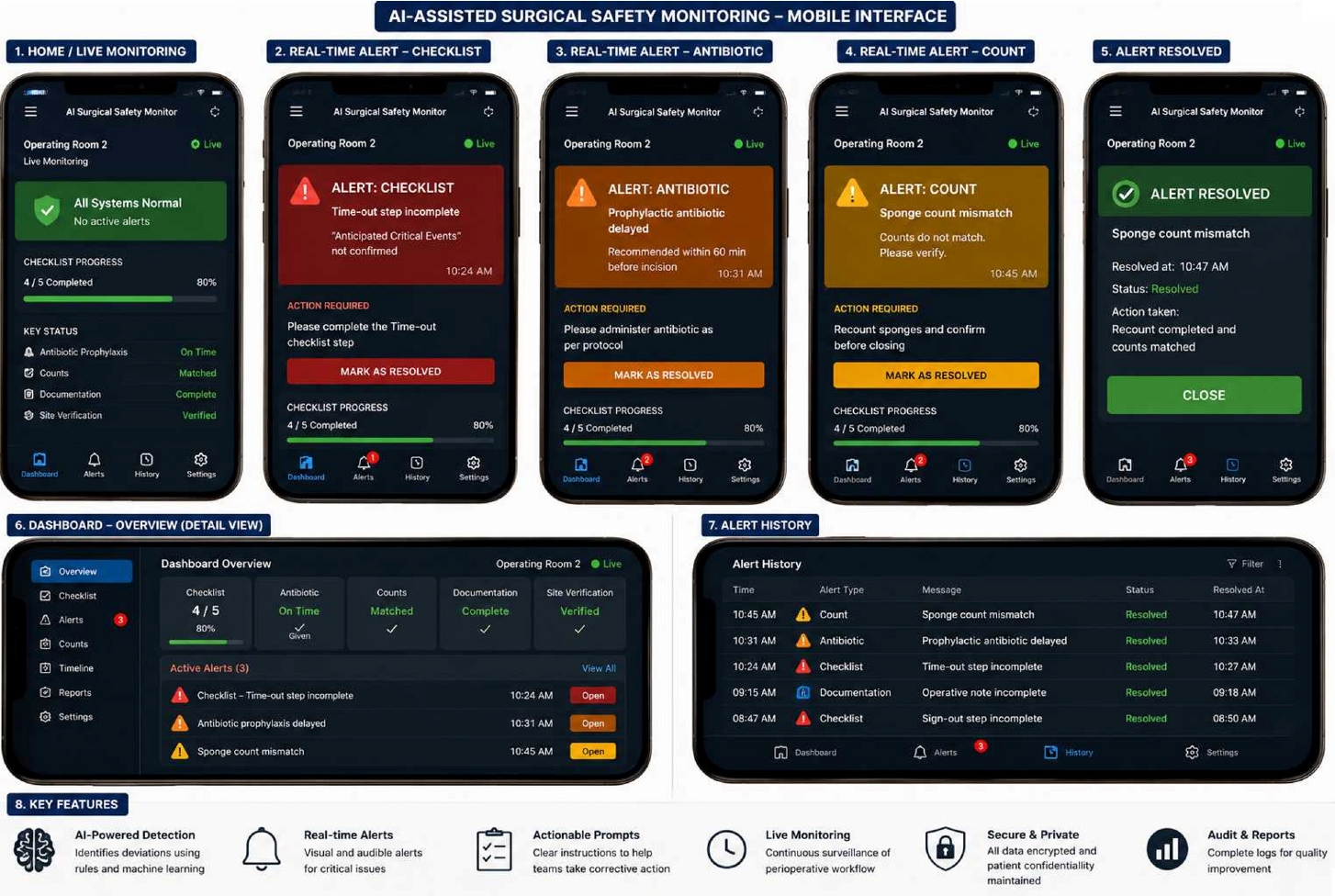
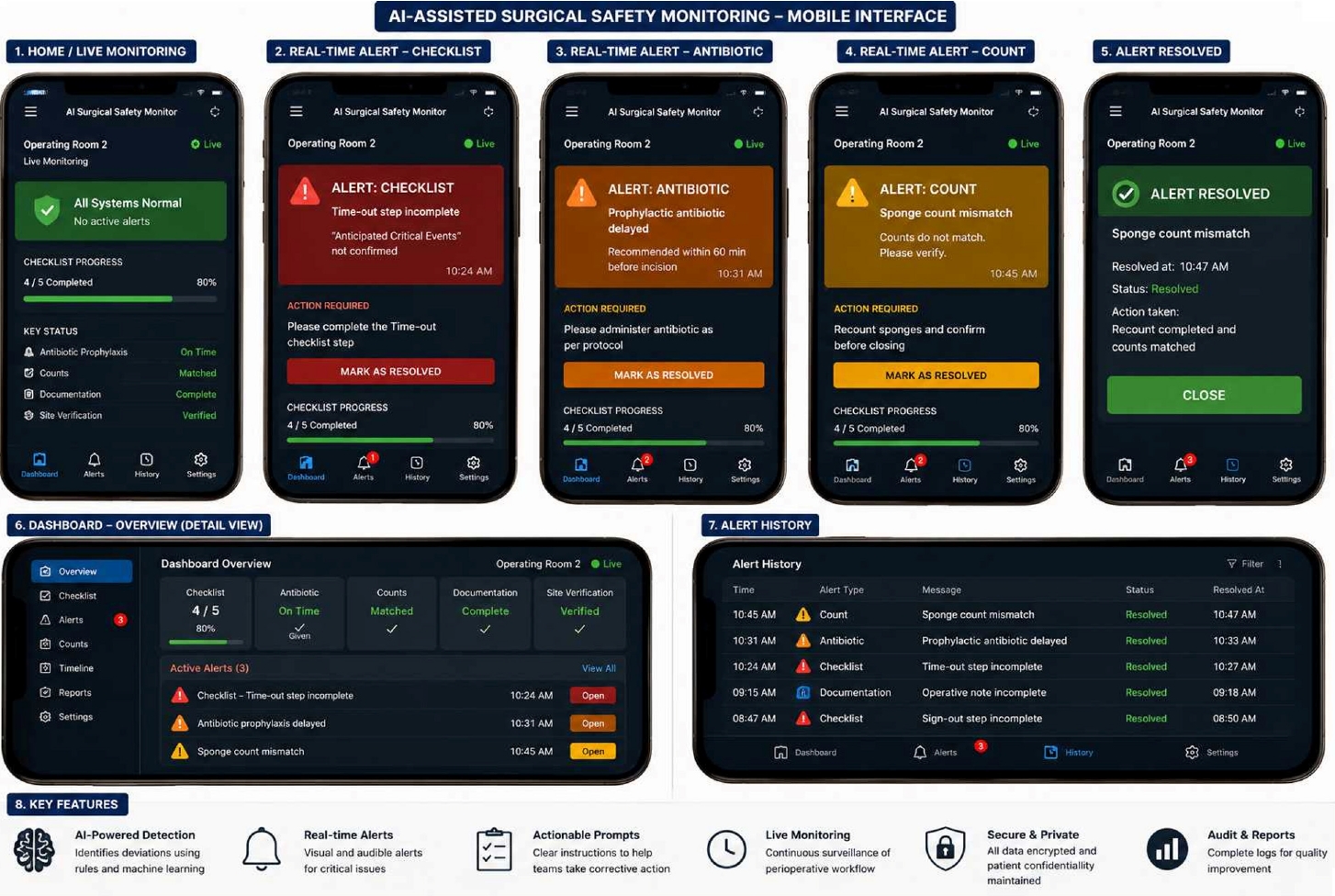
Representative examples of the mobile monitoring interface and alert notifications are presented in Fig. 1.

Ethical safeguards

The monitoring framework functioned exclusively as a supportive perioperative surveillance tool and did not independently initiate clinical interventions or replace clinical judgment. Interpretation of alerts and implementation of corrective actions remained entirely under the supervision of the surgical and anesthesia teams throughout the study period.

Conventional observation process and distinction from artificial intelligence-assisted monitoring

Routine perioperative observation within the operating room was carried out through standard team-based safety practices already established in surgical care. Monitoring responsibilities were shared among surgeons, anesthetists, scrub nurses, and circulating nurses, who supervised operative activities through direct visual assessment, verbal communication, and manual verification of safety procedures throughout surgery.
During conventional practice, Surgical Safety Checklist activities were performed verbally at the recognized perioperative phases of sign-in, time-out, and sign-out. Administration of prophylactic antibiotics was monitored manually using anesthesia documentation, operative timing records, and communication between operating room personnel. Instrument and sponge counts were conducted through routine manual counting procedures involving both scrub and circulating nurses before wound closure and at the completion of surgery. Verification of patient identity, operative site, and planned procedure was also undertaken through standard pre-incision confirmation processes.
Under this conventional approach, recognition of perioperative safety deviations depended primarily on human observation, team attentiveness, communication efficiency, and clinical experience. Identification of irregularities occurred when theatre personnel noticed omissions, inconsistencies, or workflow disruptions during the procedure. Consequently, detection could vary depending on workload, fatigue, environmental distractions, or interruptions occurring within the operating room.
The AI-assisted monitoring framework differed from this approach by providing continuous automated surveillance of structured perioperative workflow information. Rather than relying solely on manual recognition of irregularities, the digital platform analyzed perioperative data inputs in real time and generated automated notifications when predefined deviations or workflow inconsistencies were identified.
An additional difference involved the timing of detection. Conventional observation frequently relied on delayed recognition during routine workflow review, whereas the AI-supported system generated immediate on-screen prompts through the mobile monitoring interface once a potential deviation was detected. This allowed earlier review and possible correction before the end of the procedure.
Importantly, the digital monitoring platform was designed to complement existing perioperative safety practices rather than replace human supervision. Clinical interpretation of alerts and all corrective decisions remained under the responsibility of the operating team throughout the study period.
Data collection and variables

Surgical team composition and clinical experience

Operations included in the study were conducted by standard multidisciplinary operating team team’s routinely involved in general surgical care within the institution. These teams consisted of consultant general surgeons, surgical residents, anesthetic personnel, scrub nurses, circulating nurses, and operating-room support staff participating in both elective and emergency procedures.
Most surgical interventions were carried out under the supervision of consultant surgeons experienced in general surgery, while resident doctors assisted according to the institution’s postgraduate surgical training structure. Perioperative nursing personnel participating in the study were familiar with routine theatre safety practices, including checklist implementation, operative documentation, and surgical count protocols. Anesthesia services were similarly provided by experienced anesthesia staff and supervised trainees working within established institutional perioperative guidelines.
The study did not formally categorize surgical teams according to years of professional experience or level of seniority. Nevertheless, all participating personnel routinely practiced within a tertiary teaching hospital environment where perioperative safety measures, including use of the WHO Surgical Safety Checklist, already formed part of daily surgical workflow before introduction of the monitoring system.
The influence of clinical experience on perioperative safety performance is acknowledged. Teams with greater operative experience and familiarity with operating room protocols may demonstrate stronger communication, improved workflow coordination, and better adherence to established safety measures, which could contribute to lower rates of perioperative deviations. Since operator experience was not independently analyzed in the present investigation, its possible effect on deviation frequency and detection rates remains a potential confounding factor.
Additional multicenter studies involving larger patient populations may help clarify the relationship between surgical team experience, workflow performance, and the effectiveness of AI-supported perioperative monitoring systems.

Data collection

Data were gathered using a structured proforma during the perioperative period. Recorded variables included patient demographics (age and sex), type of surgical procedure, American Society of Anesthesiologists (ASA) classification, urgency of surgery (elective or emergency), comorbid conditions, and anesthesia type. Information on perioperative safety practices was also documented, including checklist completion, timing of antibiotic prophylaxis, surgical counts, and operative documentation. Any deviation from standard safety processes was noted and categorized accordingly. The method of detection—whether identified by the AI system or routine team observation—was recorded for each event to enable comparison of detection approaches.

Definition and categorization of perioperative safety irregularities

In the present investigation, a perioperative safety irregularity was defined as any identifiable interruption, omission, or inconsistency within established perioperative safety procedures occurring during surgical care that could potentially expose the patient to avoidable risk if not recognized and corrected promptly. The term referred primarily to breakdowns in workflow processes and perioperative safety practices rather than confirmed postoperative complications or direct patient injury.
The operational definitions used in the study were adapted from established perioperative safety standards rather than independently created by the investigators. These definitions were based on principles incorporated within the Surgical Safety Checklist, institutional operating room safety protocols, and internationally accepted perioperative quality-assurance recommendations relating to checklist performance, antimicrobial prophylaxis timing, procedural verification, surgical count reconciliation, and documentation accuracy.
Perioperative safety irregularities were classified into predefined operational categories adapted from established perioperative safety standards and institutional workflow protocols. The classification framework used during the study is summarized in Table 1.
Identification of deviations was performed through structured assessment of perioperative workflow documentation and intraoperative process records. Before initiation of prospective data collection, predefined classification categories were developed using commonly recognized perioperative safety domains to improve consistency of event reporting.

Checklist-performance irregularities

This category included incomplete, omitted, or inadequately documented checklist activities occurring during the sign-in, time-out, or sign-out phases of perioperative care as recommended within established surgical safety frameworks [2].

Antimicrobial prophylaxis timing irregularities

These events involved delayed administration, omission, or administration of prophylactic antibiotics outside the recommended pre-incision interval described in recognized infection-prevention guidelines [8].

Surgical count inconsistencies

This group included unresolved mismatches, uncertainties, or discrepancies involving surgical instruments, needles, or sponges identified during operative counting procedures [9].

Documentation-related irregularities

These consisted of incomplete, inconsistent, or absent perioperative documentation, including deficiencies involving operative notes, procedural records, or operating room workflow forms.

Procedural-verification irregularities

These events involved inconsistencies in confirmation of patient identity, intended procedure, or operative site before surgical incision according to accepted perioperative verification standards [2].

Additional workflow-related irregularities

This category captured other perioperative process disruptions considered relevant to patient safety but not fully represented within the predefined groups above.
Since the investigation focused on perioperative workflow surveillance, all identified events were analyzed as process-based safety irregularities irrespective of whether direct patient harm occurred. Minor documentation deficiencies and higher-risk perioperative concerns were therefore categorized separately using predefined operational criteria established before commencement of the study.
To improve methodological consistency, the classification framework was reviewed internally by members of the perioperative quality-improvement and surgical teams prior to implementation of the monitoring system.
Outcome measures
The primary outcome of interest was the frequency and type of surgical safety deviations identified during the procedures. Secondary outcomes included the proportion of deviations detected through AI-assisted monitoring, the rate of corrective actions taken before completion of surgery, and the overall detection rate of potential errors when AI support was available compared with routine observation alone.
Statistical analysis
Data were entered and analyzed using IBM SPSS Statistics version 26. Continuous variables, such as age and operative duration, were summarized using means and standard deviations, while categorical variables were presented as frequencies and percentages. Where appropriate, 95% confidence intervals (CIs) were calculated to describe the precision of key estimates.
To compare detection rates of perioperative safety deviations between conventional observation and AI-assisted monitoring, the chi-square test was applied. Assumptions for this test, including independence of observations and adequate expected cell counts, were considered prior to analysis. A two-sided p-value of less than 0.05 was regarded as statistically significant.
Given the exploratory nature of the study, no formal sample size calculation was performed. All eligible cases during the study period were included in the analysis.
Ethical considerations
Ethical approval for this study was obtained from the Research ethics committee of UNIOSUN Teaching Hospital (Osogbo, Osun State, Nigeria). The study protocol was reviewed and approved prior to commencement (approval No.: UTH/REC/2025/01/1472). The investigation was conducted in accordance with the principles outlined in the Declaration of Helsinki. Patient confidentiality was maintained throughout the study, and all data were anonymized prior to analysis.
Patient and procedure characteristics
A total of 136 patients who underwent general surgical procedures were included in the analysis. The most common operation performed was inguinal hernia repair, accounting for 40 cases (29.4%). This was followed by exploratory laparotomy in 33 patients (24.3%) and appendectomy in 25 patients (18.4%).
Less frequently performed procedures included ventral or incisional hernia repair (18 cases, 13.2%) and excisional biopsy of superficial lesions (13 cases, 9.6%). A small subset of procedures (7 cases, 5.1%) comprised other minor operations such as abscess drainage and lymph node biopsy.
The study population had a mean age of 43.9±14.1 years, with a slight male predominance (55.1% male’s vs. 44.9% females). Most interventions were carried out electively (78.7%), while the remainder (21.3%) were performed under urgent conditions.
Assessment of baseline health status showed that the majority of patients were classified as ASA II, indicating the presence of mild systemic disease. Common comorbid conditions included hypertension and diabetes mellitus, although a considerable number of patients had no significant medical history.
General anesthesia was the most frequently employed anesthetic technique, while regional and local anesthesia were utilized in selected cases depending on procedural requirements (Table 2).
Frequency and nature of perioperative safety deviations
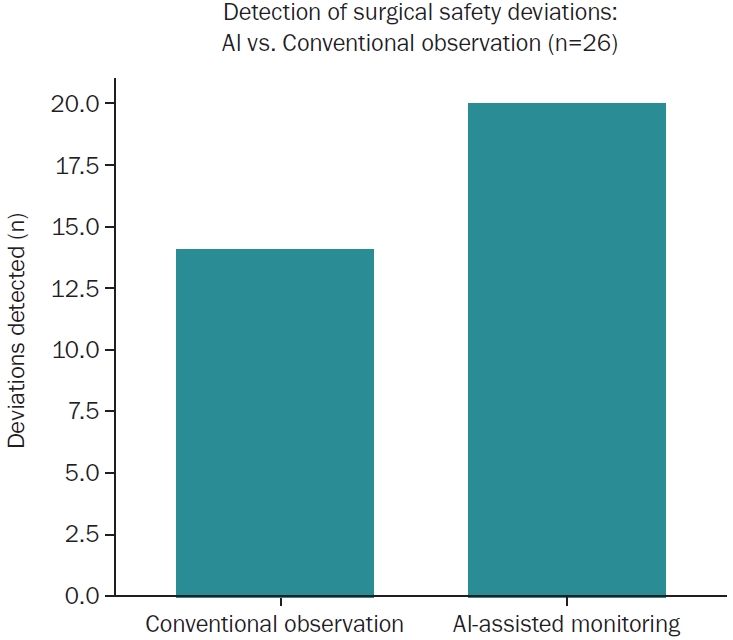
Across all procedures, 26 safety deviations were documented, corresponding to an overall incidence of 19.1% (Fig. 2).
Checklist-related lapses were the most frequently encountered issue, representing 30.8% of all deviations (8 cases). Deviations involving antibiotic prophylaxis timing occurred in six cases (23.1%), while discrepancies in surgical counts were observed in five procedures (19.2%).
Other identified issues included documentation errors (4 cases, 15.4%) and procedure/site verification inconsistencies (2 cases, 7.7%). A single deviation (3.8%) was categorized under other workflow irregularities (Table 3).
Performance of artificial intelligence-assisted monitoring in deviation detection
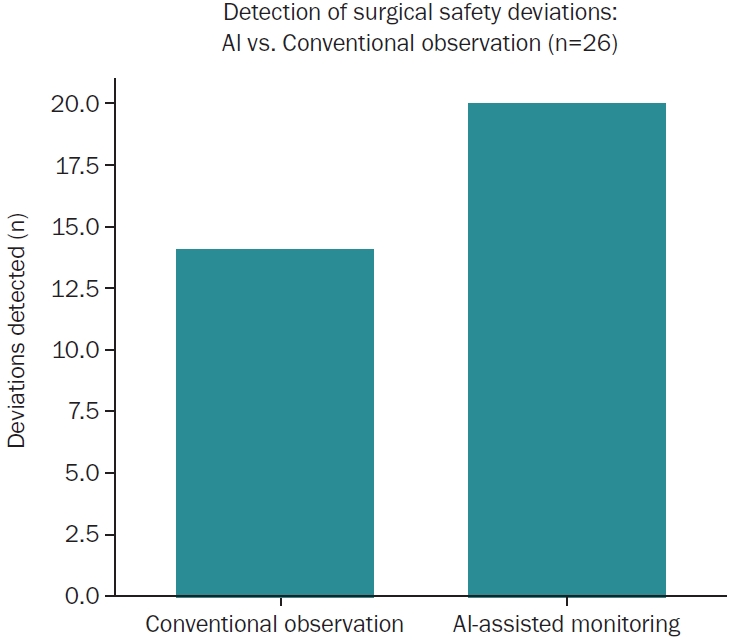
The AI-based monitoring system identified 20 out of the 26 deviations, yielding a detection proportion of 76.9%.
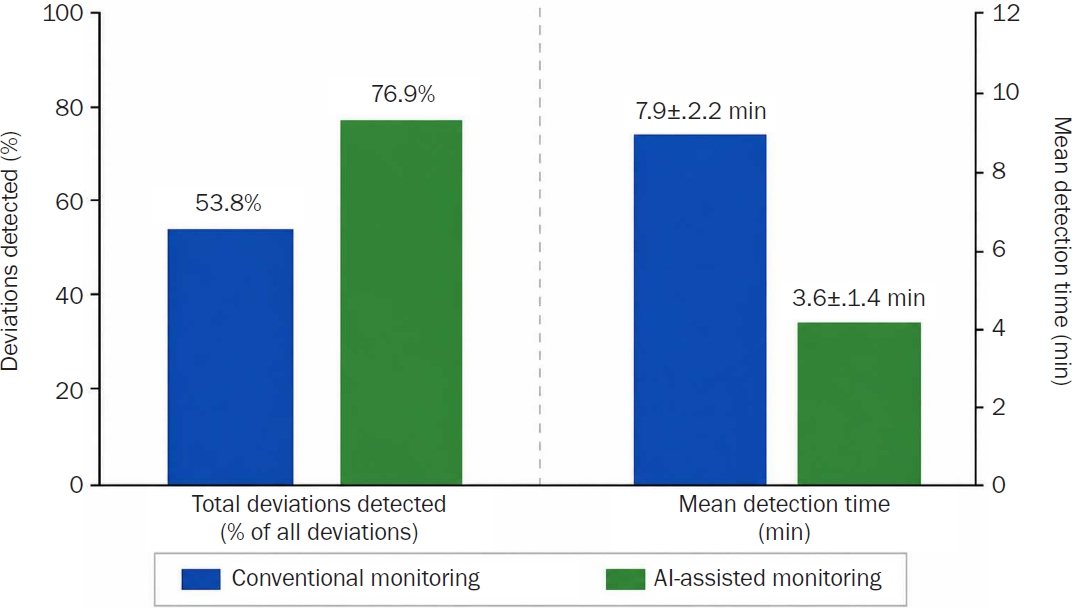
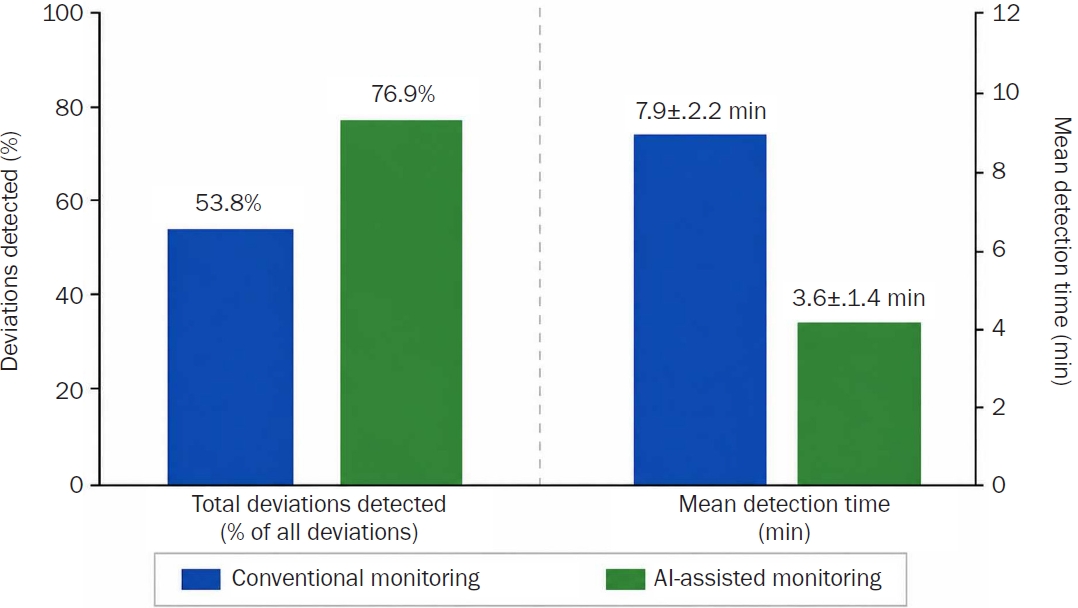
In contrast, routine intraoperative observation by the surgical team detected 14 deviations (53.8%). The inclusion of AI support therefore resulted in a higher recognition rate of perioperative safety deviations (Fig. 3).
When examined by category, the system demonstrated strong detection capability:
  • Checklist omissions were identified in 87.5% of cases (7/8)

  • Antibiotic timing issues were detected in 83.3% (5/6)

  • Surgical count discrepancies were recognized in 80.0% (4/5)

The remaining six events were identified through conventional observation without AI prompts.

Performance of the Monitoring System

The monitoring platform identified 20 of the 26 perioperative safety deviations recorded during the study, giving a detection rate of 76.9%. By comparison, routine perioperative observation recognized 14 deviations (53.8%), representing a significantly lower detection rate (p=0.02). Recognition was highest for checklist-related omissions, followed by antibiotic-timing deviations and surgical-count discrepancies.
Diagnostic assessment showed a sensitivity of 76.9% (95% CI, 56.4%–91.0%) and specificity of 91.8% (95% CI, 84.8%–96.2%). The positive and negative predictive values were 83.3% and 88.2%, respectively. Receiver-operating characteristic analysis produced an AUROC of 0.84 (95% CI, 0.74–0.93), indicating good ability to distinguish between the presence and absence of predefined safety deviations.
Safety issues were generally recognized sooner when the monitoring platform was used. The mean interval from occurrence to detection was 3.6±1.4 minutes compared with 7.9±2.2 minutes during routine observation (p<0.001). Of the 20 deviations identified by the system, 17 were addressed before the procedure ended. Corrective actions included completion of missed checklist items, administration of overdue prophylactic antibiotics, reconciliation of count discrepancies, and correction of documentation errors. No retained surgical items or wrong-site procedures were recorded during the study period.

Clarification of detection-time measurements

In the present study, AI-assisted detection time referred to the elapsed interval between the first recorded occurrence of a perioperative workflow irregularity and the time at which the monitoring platform generated an automated alert indicating the deviation. These measurements were obtained from timestamp-based workflow logs and system-generated notification records within the mobile perioperative monitoring interface.
The term conventional detection time described the interval between the occurrence of the same perioperative irregularity and the point at which the issue was identified through routine operating-room observation by members of the surgical team. Conventional recognition depended on standard perioperative supervision carried out by surgeons, anesthetists, scrub nurses, and circulating nurses during operative care.
Timing for conventional recognition was determined using perioperative workflow records, operative documentation, nursing entries, and timestamps associated with verbal acknowledgment or corrective intervention recorded during surgery. When exact timing of verbal recognition could not be confirmed directly, the earliest documented indication of deviation recognition within the perioperative record was used for analysis.
These timing variables were included to compare the relative speed of perioperative deviation recognition between automated workflow surveillance and standard human observation. Earlier identification of workflow abnormalities was considered clinically relevant because timely recognition may permit corrective action before escalation into more significant safety-related events.
The detection-time measures applied in this investigation were developed specifically for the present workflow-monitoring analysis rather than adopted from an external validated scoring framework. Nevertheless, the conceptual basis for these measurements was informed by previous studies examining intraoperative workflow recognition, surgical process analysis, and real-time AI-supported monitoring systems.
The shorter average detection interval observed with the AI-supported framework suggests that automated perioperative workflow surveillance may facilitate earlier recognition of predefined safety-process irregularities during surgical procedures.

Intraoperative correction of Identified deviations

Among the 20 deviations detected by the AI system, 17 (85.0%) were resolved during the procedure, allowing correction before completion of surgery.
These corrective actions included:
  • Completion of omitted checklist steps

  • Timely administration of delayed antibiotics

  • Verification and reconciliation of surgical counts

  • Correction of incomplete documentation

Three deviations required postoperative documentation updates but were not associated with adverse outcomes (Table 3).
Comparison with conventional detection
The use of AI-assisted monitoring was associated with a statistically significant improvement in detection of safety deviations. Detection increased from 53.8% with routine observation to 76.9% with AI support (p=0.02) (Table 4).
Comparative analysis of artificial intelligence-supported surveillance and routine perioperative observation
An additional comparison was performed to examine differences between AI-supported workflow surveillance and standard perioperative monitoring carried out within the operating room. In the institutional setting of the present study, routine or conventional detection referred to the usual perioperative supervision performed by surgeons, anesthetists, scrub nurses, and circulating nurses through direct observation, verbal communication, manual checklist confirmation, and standard workflow monitoring during operative care.
Using conventional practice alone, perioperative irregularities were recognized when operating-room personnel manually identified omissions, inconsistencies, or workflow disruptions during surgery. Consequently, detection depended heavily on human vigilance, communication efficiency, situational awareness, and operative experience.
The AI-supported framework differed by continuously evaluating structured perioperative workflow inputs and automatically generating alert notifications whenever predefined workflow abnormalities or safety-process deviations were recognized. The system therefore acted as a supplementary surveillance mechanism designed to support—rather than replace—existing perioperative safety practices.
Among the 26 documented perioperative irregularities identified during the investigation, routine observation detected 14 events (53.8%), whereas the AI-supported monitoring framework recognized 20 events (76.9%). This difference in overall recognition rate reached statistical significance (p=0.02) as in Table 5.
Differences between the two approaches were most apparent in relation to incomplete checklist execution and delayed antimicrobial prophylaxis, where automated alerts frequently enabled earlier review and correction before the conclusion of the procedure. From a clinical perspective, earlier recognition of workflow-related abnormalities may help reduce persistence of unresolved perioperative process failures that could potentially contribute to avoidable complications.
Although the present study did not directly evaluate postoperative morbidity or long-term patient outcomes, the findings suggest that automated perioperative workflow surveillance may improve consistency of deviation recognition during routine surgical care, particularly in busy operating-room environments where fatigue, interruptions, or communication challenges may influence human observation.
Impact on surgical workflow
The introduction of the monitoring system did not result in measurable disruption to operative processes. The average operative duration (81.6±24.3 minutes) remained consistent with standard practice within the institution.
Importantly, no major preventable intraoperative complications—including retained surgical items or wrong-site surgery—were observed during the study period.
The present study explored the role of AI-assisted monitoring in identifying perioperative safety deviations during routine general surgical procedures. The findings indicate that deviations from established safety practices remain relatively common, even in structured operating room environments, and that AI-supported systems may enhance their recognition and timely correction. In particular, the integration of real-time monitoring into perioperative workflows was associated with a higher detection rate of safety deviations compared with conventional observation alone, as well as earlier identification of workflow irregularities.
Patient safety in surgery continues to represent a global concern, despite longstanding efforts to standardize perioperative practices. Previous research has demonstrated that a substantial proportion of surgical adverse events are preventable and often arise from system-level factors rather than isolated individual errors [1]. These factors commonly include communication breakdowns, incomplete adherence to established protocols, and coordination challenges within the surgical team. Consequently, modern approaches to improving surgical safety increasingly emphasize strengthening systems of care rather than focusing solely on individual performance.
One of the key findings of this study was the relatively frequent occurrence of incomplete surgical safety checklist execution. Since its introduction, the WHO Surgical Safety Checklist has become a cornerstone of perioperative safety initiatives. Its implementation has been associated with reductions in postoperative morbidity and mortality across diverse healthcare settings [2]. However, maintaining consistent adherence remains a challenge in routine practice. Factors such as time constraints, workflow interruptions, and team dynamics may contribute to variability in compliance. Similar observations have been reported in previous studies examining long-term checklist utilization [10,11]. In this context, AI-assisted monitoring may provide an additional safeguard by identifying missed steps and prompting their completion during ongoing procedures.
Another important category of deviation observed in this study was delayed administration of prophylactic antibiotics. Appropriate timing of antibiotic prophylaxis is a well-established strategy for reducing surgical site infections. International guidelines recommend administration within a defined interval prior to incision to ensure optimal tissue concentrations at the time of surgery [8]. Despite these recommendations, adherence to timing protocols remains inconsistent in practice. Contributing factors may include communication gaps between surgical and anesthesia teams, as well as workflow disruptions in the operating room. The ability of AI systems to track perioperative timelines and generate real-time alerts may therefore offer a practical approach to improving compliance with established guidelines.
Discrepancies in surgical counts were also identified as a notable safety concern. Retained surgical items, although uncommon, represent one of the most serious preventable complications in surgical care. Traditional counting protocols rely heavily on manual processes, which may be affected by human factors such as fatigue, distraction, or interruptions. Technological innovations, including barcode systems and radiofrequency identification, have been shown to enhance the detection of counting errors [9]. AI-assisted monitoring may further strengthen these systems by identifying irregularities in workflow patterns that suggest potential counting discrepancies. In the present study, the monitoring system successfully detected the majority of such deviations, supporting its potential role as an adjunct to existing safety measures.
An important observation from this study was the earlier detection of safety deviations when AI-assisted monitoring was used. Timely recognition of workflow disruptions is critical in preventing escalation into adverse events. Delays in detection may allow minor process deviations to evolve into clinically significant complications. AI-based systems capable of real-time analysis may enhance situational awareness within the operating room by identifying irregular patterns as they occur. Previous studies on AI in healthcare have highlighted its potential to support early risk detection and clinical decision-making [4,12]. The findings of the present study are consistent with this perspective and suggest that AI-assisted monitoring may facilitate earlier intervention in perioperative care.
It is important to note that this study focused primarily on process-related safety indicators rather than direct clinical outcomes. While improvements in perioperative processes are often considered proxies for quality of care, their direct relationship with patient outcomes may not always be immediately measurable. Nevertheless, several of the processes evaluated—such as adherence to checklist protocols, timely antibiotic administration, and accurate surgical counts—have been linked to reductions in preventable complications in previous studies [2,8,11,13]. Therefore, improvements in these areas may reasonably contribute to better patient outcomes, although this relationship was not directly assessed in the present investigation.
The integration of AI into surgical practice also introduces important ethical and practical considerations. Issues related to data privacy, algorithm transparency, and accountability must be carefully addressed. Concerns have been raised regarding the interpretability of machine learning models, particularly those that function as “black box” systems with limited explainability [14]. Ensuring transparency and maintaining clinician oversight are therefore essential when implementing AI-based tools in healthcare. In the present study, the AI system functioned strictly as a decision-support tool, with all clinical decisions remaining under the authority of the surgical team. This approach is consistent with current recommendations that AI should augment, rather than replace, human expertise.
The monitoring platform integrated predefined protocol-monitoring rules with supervised machine-learning functions and should therefore be regarded as a hybrid exploratory workflow-surveillance system rather than an entirely autonomous AI model. Its operation depended mainly on structured perioperative data inputs and predefined safety-process indicators, without the use of advanced deep-learning methods or continuously adaptive self-learning algorithms [5,14,15].
Another important consideration is the applicability of AI technologies across different healthcare environments. Many AI systems are developed and validated in high-resource settings with advanced digital infrastructure. However, a significant proportion of surgical care globally is delivered in resource-limited environments. For AI-assisted monitoring to achieve broader impact, systems must be adaptable to varying clinical contexts. The present study, conducted in a tertiary care setting, provides preliminary evidence of feasibility, but further research is needed to evaluate implementation in diverse healthcare systems.
Several limitations should be considered when interpreting the findings of this study. First, the absence of a distinct control group limits the ability to determine the independent effect of AI-assisted monitoring. Because the system was active during all procedures, comparisons were made between AI-assisted detection and routine observation within the same cases. This design restricts causal inference and introduces the possibility of observer-related bias.
Second, the total number of documented perioperative safety deviations was relatively low. Although 136 procedures were included in the investigation, only 26 deviations were identified during the study period. This limited event frequency may affect the precision and stability of several reported performance measures, including sensitivity, specificity, predictive values, false-positive and false-negative rates, and AUROC estimates. Accordingly, these findings should be interpreted carefully, particularly because the study was exploratory in nature and developmental validation was performed using a relatively modest institutional dataset. Previous studies evaluating AI applications in surgery and clinical prediction modeling have similarly emphasized the importance of larger datasets and external validation when interpreting model-performance metrics [15-17]. Additional investigations involving larger multicenter cohorts and external validation strategies will be required to determine the reproducibility and generalizability of the reported model-performance characteristics. The relatively small number of observed perioperative safety deviations may also have limited the precision and stability of diagnostic-performance estimates.
An additional limitation concerns the validation strategy used during development of the monitoring framework. Model assessment was limited to internal validation procedures performed within the institutional dataset, including random training-validation partitioning and five-fold cross-validation. Independent external validation using datasets from other healthcare institutions was not conducted. In addition, neither temporal validation nor prospective adaptive retraining of the algorithm was evaluated during the study period. As a result, the extent to which the reported performance measures can be generalized to different surgical settings, institutional workflows, or patient populations remains uncertain. Prior research involving clinical machine-learning systems has consistently highlighted the importance of external validation before wider clinical application of predictive models [15-17]. Further multicenter studies using independent datasets will therefore be required to determine the reproducibility, stability, and broader applicability of the monitoring framework across diverse perioperative environments.
Third, the study was conducted in a single institution, and local workflow characteristics may influence both the occurrence of deviations and the performance of the monitoring system. Variations in surgical practices, staffing, and institutional protocols may limit generalizability. Multicenter studies would provide more robust evidence regarding the broader applicability of these findings [15,18].
Finally, the study did not evaluate patient-centered outcomes such as postoperative complications, length of hospital stay, or mortality. While improvements in process measures are encouraging, further research is required to determine whether AI-assisted monitoring leads to measurable improvements in clinical outcomes.
Despite these limitations, this study contributes to the growing body of literature on the application of AI in surgical safety. By demonstrating improved detection rates and earlier recognition of perioperative deviations, the findings support the potential role of AI as an adjunct to existing safety systems. As interest in data-driven quality improvement continues to expand, AI-assisted monitoring may become an increasingly valuable tool in enhancing surgical safety.
Future research should focus on more rigorous study designs, including controlled or randomized approaches, to better evaluate the causal impact of AI-assisted monitoring. Larger, multicenter studies will also be important in improving generalizability. In addition, evaluating the relationship between improved process measures and clinical outcomes will be essential in determining the true value of AI in surgical care.
Conclusion
AI-assisted monitoring demonstrated a promising ability to identify and help correct common safety deviations during general surgical procedures. When integrated thoughtfully into clinical workflows, AI technologies may complement existing safety strategies and support surgical teams in monitoring perioperative processes. Continued investigation and careful implementation will be essential to ensure that these tools are used effectively and responsibly in the operating room.
Fig. 1.
Representative mobile interface of the AI-assisted perioperative monitoring system.
AI, artificial intelligence.
jsie-2026-00080f1.jpg
Fig. 2.
Distribution of perioperative safety deviations identified during general surgical procedures. The figure illustrates the relative frequency of predefined perioperative safety deviations detected during the study period, including checklist omissions, antibiotic-timing irregularities, surgical-count discrepancies, documentation deficiencies, and procedural-verification concerns.
AI, artificial intelligence.
jsie-2026-00080f2.jpg
Fig. 3.
Comparison between AI-assisted monitoring and conventional monitoring for detection of perioperative safety deviations. The figure compares the proportion of perioperative safety deviations identified through routine conventional monitoring and AI-assisted monitoring during the study period. AI-supported monitoring demonstrated a higher overall detection rate and shorter mean detection time compared with conventional perioperative monitoring. Total deviations detected are presented as % of 26 total deviation.
AI, artificial intelligence.
jsie-2026-00080f3.jpg
Table 1.
Classification framework for perioperative safety deviations
Category Operational definition Reference standard
Checklist-performance deviations Incomplete, omitted, or improperly documented checklist activities during sign-in, time-out, or sign-out phases WHO Surgical Safety Checklist [2]
Antimicrobial prophylaxis timing deviations Delayed, omitted, or improperly timed prophylactic antibiotic administration before incision WHO surgical infection-prevention guidelines [8]
Surgical count inconsistencies Unresolved discrepancies involving instrument, needle, or sponge counts during operative procedures Standard perioperative counting protocols [9]
Documentation-related deviations Missing, incomplete, or inconsistent perioperative documentation or workflow records Institutional perioperative documentation standards
Procedural-verification deviations Failure or inconsistency in confirming patient identity, operative site, or intended procedure before incision WHO perioperative verification recommendations [2]
Additional workflow-related deviations Other perioperative workflow disruptions considered potentially relevant to patient safety Institutional workflow review criteria

WHO, World Health Organization.

Table 2.
Baseline demographic and clinical characteristics of the study population (n=136)
Variable Value
Age (yr) 43.9±14.1
Sex
 Male 75 (55.1)
 Female 61 (44.9)
ASA physical status classification
 ASA I 39 (28.7)
 ASA II 68 (50.0)
 ASA III 29 (21.3)
Nature of surgery
 Elective 107 (78.7)
 Emergency 29 (21.3)
Type of anesthesia
 General anesthesia 82 (60.3)
 Regional anesthesia 34 (25.0)
 Local anesthesia 20 (14.7)
Common comorbid conditionsa
 Hypertension 31 (22.8)
 Diabetes mellitus 14 (10.3)
 No major comorbidity documented 63 (46.3)
Primary surgical procedure
 Inguinal hernia repair 40 (29.4)
 Exploratory laparotomy 33 (24.3)
 Appendectomy 25 (18.4)
 Ventral/incisional hernia repair 18 (13.2)
 Excisional biopsy 13 (9.6)
 Other minor proceduresb 7 (5.1)

Values are presented as mean±standard deviation or number (%).

ASA, American Society of Anesthesiologists.

aOnly selected common comorbid conditions are presented; other comorbidities are not shown. bOther procedures included abscess drainage, lymph-node biopsy, and minor soft-tissue operations.

Table 3.
Types of perioperative safety deviations detected during procedures (n=26)
Type of surgical perioperative safety deviation Value
Incomplete surgical safety checklist steps 8 (30.8)
Incorrect or delayed antibiotic prophylaxis 6 (23.1)
Instrument or sponge count discrepancies 5 (19.2)
Documentation errors in operative records 4 (15.4)
Wrong-site/procedure verification issues 2 (7.7)
Other workflow-related safety deviations 1 (3.8)
Total 26 (100)

Values are presented as number (%).

Table 4.
Diagnostic performance of the AI-assisted monitoring system
Metric Value
Sensitivity (%) 76.9 (56.4–91.0)
Specificity (%) 91.8 (84.8–96.2)
Positive predictive value (%) 83.3 (62.6–95.3)
Negative predictive value (%) 88.2 (80.7–93.6)
False-positive rate (%) 8.2 (3.8–15.2)
False-negative rate (%) 23.1 (9.0–43.6)
AUROC 0.84 (0.74–0.93)
Classification threshold 0.50
Mean AI detection time (min) 3.6±1.4
Mean conventional detection time (min) 7.9±2.2

Values are presented as estimate (95% confidence interval), threshold value, or mean±standard deviation.

AI, artificial intelligence; AUROC, area under the receiver-operating characteristic curve.

Table 5.
Comparison between AI-assisted monitoring and conventional observation for detection of perioperative safety deviations
Variable Conventional observation AI-assisted monitoring p-value
Total deviations detected 14/26 (53.8) 20/26 (76.9) 0.02
Mean detection time (min) 7.9±2.2 3.6±1.4 <0.001
Checklist-related deviations detected 5/8 (62.5) 7/8 (87.5) -
Antibiotic-timing deviations detected 3/6 (50.0) 5/6 (83.3) -
Surgical-count discrepancies detected 3/5 (60.0) 4/5 (80.0) -
Corrective actions completed before completion of surgery 11/14 (78.6) 17/20 (85.0) -

Values are presented as number (%) or mean±standard deviation.

AI, artificial intelligence; -, not applicable.

  • 1. Makary MA, Daniel M. Medical error: the third leading cause of death in the US. BMJ. 2016;353:i2139.ArticlePubMed
  • 2. Haynes AB, Weiser TG, Berry WR, Lipsitz SR, Breizat AH, Dellinger EP, et al. Changes in safety attitude and relationship to decreased postoperative morbidity and mortality following implementation of a checklist-based surgical safety intervention. BMJ Qual Saf. 2011;20:102-107.ArticlePubMed
  • 3. Russ S, Rout S, Caris J, Mansell J, Davies R, Mayer E, et al. Measuring variation in use of the WHO surgical safety checklist in the operating room: a multicenter prospective cross-sectional study. J Am Coll Surg. 2015;220:1-11.e4.ArticlePubMed
  • 4. Topol EJ. High-performance medicine: the convergence of human and artificial intelligence. Nat Med. 2019;25:44-56.ArticlePubMedPDF
  • 5. Hashimoto DA, Rosman G, Rus D, Meireles OR. Artificial intelligence in surgery: promises and perils. Ann Surg. 2018;268:70-76.ArticlePubMedPMC
  • 6. Mascagni P, Vardazaryan A, Alapatt D, Urade T, Emre T, Fiorillo C, et al. Artificial intelligence for surgical safety: automatic assessment of the critical view of safety in laparoscopic cholecystectomy using deep learning. Ann Surg. 2022;275:955-961.ArticlePubMed
  • 7. Madani A, Namazi B, Altieri MS, Hashimoto DA, Rivera AM, Pucher PH, et al. Artificial intelligence for intraoperative guidance: using semantic segmentation to identify surgical anatomy during laparoscopic cholecystectomy. Ann Surg. 2022;276:363-369.ArticlePubMed
  • 8. World Health Organization. Global guidelines for the prevention of surgical site infection. WHO; 2018.
  • 9. Greenberg CC, Diaz-Flores R, Lipsitz SR, Regenbogen SE, Mulholland L, Mearn F, et al. Bar-coding surgical sponges to improve safety: a randomized controlled trial. Ann Surg. 2008;247:612-616.ArticlePubMed
  • 10. Anderson O, Davis R, Hanna GB, Vincent CA. Surgical adverse events: a systematic review. Am J Surg. 2013;206:253-262.ArticlePubMed
  • 11. Bergs J, Hellings J, Cleemput I, Zurel Ö, De Troyer V, Van Hiel M, et al. Systematic review and meta-analysis of the effect of the World Health Organization surgical safety checklist on postoperative complications. Br J Surg. 2014;101:150-158.ArticlePubMedPDF
  • 12. Esteva A, Robicquet A, Ramsundar B, Kuleshov V, DePristo M, Chou K, et al. A guide to deep learning in healthcare. Nat Med. 2019;25:24-29.ArticlePubMedPDF
  • 13. Padoy N. Machine and deep learning for workflow recognition during surgery. Minim Invasive Ther Allied Technol. 2019;28:82-90.ArticlePubMed
  • 14. Char DS, Shah NH, Magnus D. Implementing machine learning in health care: addressing ethical challenges. N Engl J Med. 2018;378:981-983.ArticlePubMedPMC
  • 15. Rajkomar A, Dean J, Kohane I. Machine learning in medicine. N Engl J Med. 2019;380:1347-1358.ArticlePubMed
  • 16. Loftus TJ, Tighe PJ, Filiberto AC, Efron PA, Brakenridge SC, Mohr AM, et al. Artificial intelligence and surgical decision-making. JAMA Surg. 2020;155:148-158.ArticlePubMedPMC
  • 17. Senders JT, Arnaout O, Karhade AV, Dasenbrock HH, Gormley WB, Broekman ML, et al. Natural and artificial intelligence in neurosurgery: a systematic review. Neurosurgery. 2018;83:181-192.ArticlePubMed
  • 18. Collins GS, Dhiman P, Ma J, Schlussel MM, Archer L, Van Calster B, et al. Evaluation of clinical prediction models (part 1): from development to external validation. BMJ. 2024;384:e074819.ArticlePubMedPMC

Figure & Data

References

    Citations

    Citations to this article as recorded by  

      • PubReader PubReader
      • ePub LinkePub Link
      • Cite this Article
        Cite this Article
        export Copy Download
        Close
        Download Citation
        Download a citation file in RIS format that can be imported by all major citation management software, including EndNote, ProCite, RefWorks, and Reference Manager.

        Format:
        • RIS — For EndNote, ProCite, RefWorks, and most other reference management software
        • BibTeX — For JabRef, BibDesk, and other BibTeX-specific software
        Include:
        • Citation for the content below
        Artificial Intelligence-Assisted Monitoring for Detecting Perioperative Safety Deviations in General Surgical Practice
        Close
      • XML DownloadXML Download
      Figure
      • 0
      • 1
      • 2
      Artificial Intelligence-Assisted Monitoring for Detecting Perioperative Safety Deviations in General Surgical Practice
      Image Image Image
      Fig. 1. Representative mobile interface of the AI-assisted perioperative monitoring system.AI, artificial intelligence.
      Fig. 2. Distribution of perioperative safety deviations identified during general surgical procedures. The figure illustrates the relative frequency of predefined perioperative safety deviations detected during the study period, including checklist omissions, antibiotic-timing irregularities, surgical-count discrepancies, documentation deficiencies, and procedural-verification concerns.AI, artificial intelligence.
      Fig. 3. Comparison between AI-assisted monitoring and conventional monitoring for detection of perioperative safety deviations. The figure compares the proportion of perioperative safety deviations identified through routine conventional monitoring and AI-assisted monitoring during the study period. AI-supported monitoring demonstrated a higher overall detection rate and shorter mean detection time compared with conventional perioperative monitoring. Total deviations detected are presented as % of 26 total deviation.AI, artificial intelligence.
      Artificial Intelligence-Assisted Monitoring for Detecting Perioperative Safety Deviations in General Surgical Practice
      Category Operational definition Reference standard
      Checklist-performance deviations Incomplete, omitted, or improperly documented checklist activities during sign-in, time-out, or sign-out phases WHO Surgical Safety Checklist [2]
      Antimicrobial prophylaxis timing deviations Delayed, omitted, or improperly timed prophylactic antibiotic administration before incision WHO surgical infection-prevention guidelines [8]
      Surgical count inconsistencies Unresolved discrepancies involving instrument, needle, or sponge counts during operative procedures Standard perioperative counting protocols [9]
      Documentation-related deviations Missing, incomplete, or inconsistent perioperative documentation or workflow records Institutional perioperative documentation standards
      Procedural-verification deviations Failure or inconsistency in confirming patient identity, operative site, or intended procedure before incision WHO perioperative verification recommendations [2]
      Additional workflow-related deviations Other perioperative workflow disruptions considered potentially relevant to patient safety Institutional workflow review criteria
      Variable Value
      Age (yr) 43.9±14.1
      Sex
       Male 75 (55.1)
       Female 61 (44.9)
      ASA physical status classification
       ASA I 39 (28.7)
       ASA II 68 (50.0)
       ASA III 29 (21.3)
      Nature of surgery
       Elective 107 (78.7)
       Emergency 29 (21.3)
      Type of anesthesia
       General anesthesia 82 (60.3)
       Regional anesthesia 34 (25.0)
       Local anesthesia 20 (14.7)
      Common comorbid conditionsa
       Hypertension 31 (22.8)
       Diabetes mellitus 14 (10.3)
       No major comorbidity documented 63 (46.3)
      Primary surgical procedure
       Inguinal hernia repair 40 (29.4)
       Exploratory laparotomy 33 (24.3)
       Appendectomy 25 (18.4)
       Ventral/incisional hernia repair 18 (13.2)
       Excisional biopsy 13 (9.6)
       Other minor proceduresb 7 (5.1)
      Type of surgical perioperative safety deviation Value
      Incomplete surgical safety checklist steps 8 (30.8)
      Incorrect or delayed antibiotic prophylaxis 6 (23.1)
      Instrument or sponge count discrepancies 5 (19.2)
      Documentation errors in operative records 4 (15.4)
      Wrong-site/procedure verification issues 2 (7.7)
      Other workflow-related safety deviations 1 (3.8)
      Total 26 (100)
      Metric Value
      Sensitivity (%) 76.9 (56.4–91.0)
      Specificity (%) 91.8 (84.8–96.2)
      Positive predictive value (%) 83.3 (62.6–95.3)
      Negative predictive value (%) 88.2 (80.7–93.6)
      False-positive rate (%) 8.2 (3.8–15.2)
      False-negative rate (%) 23.1 (9.0–43.6)
      AUROC 0.84 (0.74–0.93)
      Classification threshold 0.50
      Mean AI detection time (min) 3.6±1.4
      Mean conventional detection time (min) 7.9±2.2
      Variable Conventional observation AI-assisted monitoring p-value
      Total deviations detected 14/26 (53.8) 20/26 (76.9) 0.02
      Mean detection time (min) 7.9±2.2 3.6±1.4 <0.001
      Checklist-related deviations detected 5/8 (62.5) 7/8 (87.5) -
      Antibiotic-timing deviations detected 3/6 (50.0) 5/6 (83.3) -
      Surgical-count discrepancies detected 3/5 (60.0) 4/5 (80.0) -
      Corrective actions completed before completion of surgery 11/14 (78.6) 17/20 (85.0) -
      Table 1. Classification framework for perioperative safety deviations

      WHO, World Health Organization.

      Table 2. Baseline demographic and clinical characteristics of the study population (n=136)

      Values are presented as mean±standard deviation or number (%).

      ASA, American Society of Anesthesiologists.

      aOnly selected common comorbid conditions are presented; other comorbidities are not shown. bOther procedures included abscess drainage, lymph-node biopsy, and minor soft-tissue operations.

      Table 3. Types of perioperative safety deviations detected during procedures (n=26)

      Values are presented as number (%).

      Table 4. Diagnostic performance of the AI-assisted monitoring system

      Values are presented as estimate (95% confidence interval), threshold value, or mean±standard deviation.

      AI, artificial intelligence; AUROC, area under the receiver-operating characteristic curve.

      Table 5. Comparison between AI-assisted monitoring and conventional observation for detection of perioperative safety deviations

      Values are presented as number (%) or mean±standard deviation.

      AI, artificial intelligence; -, not applicable.


      JSIE : Journal of Surgical Innovation and Education
      TOP